PRODUCTS
Categories
Hot Products

Garland Idler Roller
Leave a request and we will contact you within 10 minutes!
PRODUCT INTRODUCTION
 In the Garland carrying idler, the rollers are hinged together and then attached with flexible links to the steel structures of the conveyor. Several hinged connected rollers are called "roller garland". Together with the garland suspensions they build a "garland idler" or "catenary idler". The rollers of this type are called "garland rollers" or "catenary rollers". This type of roller fixation allows the rollers to move transversely to the conveying direction and thus offers important advantages.
WHERE IS IT USED
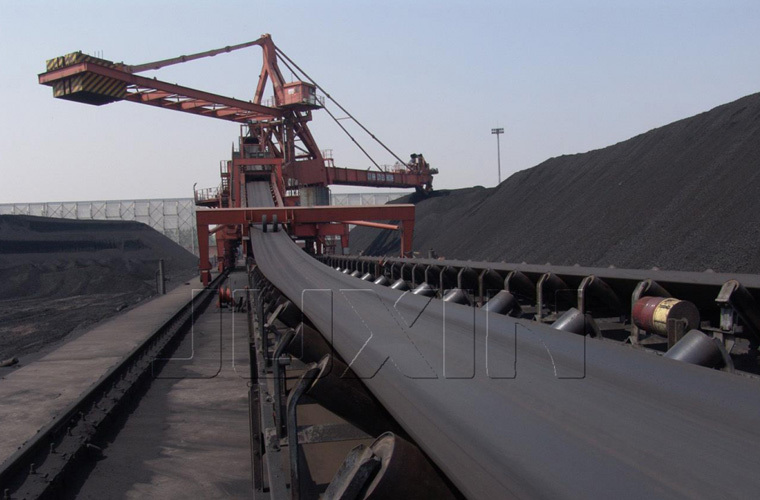
Conveyor garland idler roller is commonly used in conveyor systems for a variety of industries, including mining, quarrying, cement, and power generation. They are particularly useful in applications where the conveyor belt is carrying heavy loads or where the conveyor is operating at high speeds.
Suspended carrying idler are often used in long conveyor systems, where the weight of the material being conveyed can cause the belt to sag. The garland pattern of the idlers helps to distribute the weight of the material more evenly across the belt, reducing the risk of sagging and improving the overall efficiency of the conveyor system.
In addition to their use in long conveyor systems, suspended impact idler are also used in applications where the conveyor belt is subject to high levels of impact or where the material being conveyed is abrasive. The durable construction of the idlers helps to withstand the wear and tear of these harsh environments, reducing maintenance requirements and extending the lifespan of the conveyor system.
PRODUCT DESIGN

The design principle of conveyor garland idler rollers is based on the need to support and guide the conveyor belt while minimizing friction and wear. The rollers are typically made of high-quality materials such as steel or polymer, and are designed to withstand the weight and pressure of the conveyor belt and the materials being transported.
The rollers are arranged in sets of three or five, with the middle roller offset to create a trough for the conveyor belt to run through. This design helps to prevent the belt from sagging and ensures that it stays centered on the conveyor. The rollers are mounted on a frame or bracket, which is attached to the conveyor structure.
The diameter and spacing of the rollers are important design considerations, as they affect the overall performance of the conveyor system. The diameter of the rollers should be large enough to support the weight of the conveyor belt and the materials being transported, while the spacing should be optimized to minimize friction and wear.
THE CONVEYOR BELT HAS THE FOLLOWING DESIGN
 1 Garland carrying idlers are a type of conveyor idler that consists of a series of rollers mounted on a frame. The rollers are arranged in a garland pattern, with each roller mounted on its own shaft and supported by bearings. The frame is typically made of steel and is designed to support the weight of the rollers and the material being conveyed. The rollers themselves are typically made of steel or other durable materials and are designed to rotate freely.
2 Roller Body
The roller body is the main part of the suspended carrying idler. It is usually made of high - quality steel or other durable materials. For example, in heavy - duty conveyor systems, the roller body might be made of thick - walled carbon steel to withstand the weight of bulky and heavy materials. The surface of the roller body is often smooth to reduce friction with the conveyor belt and ensure the smooth running of the belt.
3 Shaft
The shaft is a crucial component that runs through the center of the roller body. It provides the rotational axis for the roller. High - strength alloy steel is commonly used to manufacture the shaft to bear the radial and axial loads. The precision of the shaft's machining is very important. A well - machined shaft with accurate dimensions and a smooth surface can ensure the stable rotation of the roller and reduce energy loss due to friction.
4 Bearing
Bearings are installed between the shaft and the roller body. They enable the roller to rotate smoothly around the shaft. There are different types of bearings used, such as deep - groove ball bearings or tapered roller bearings. Deep - groove ball bearings are suitable for applications with relatively light loads and high - speed rotation, while tapered roller bearings can handle heavier radial and axial loads. The quality of the bearings directly affects the service life and performance of the suspended carrying idler.
5 Hanger
The hanger is used to suspend the carrying idler from the conveyor frame. It is usually designed to be adjustable to allow for proper tensioning and alignment of the conveyor belt. The hanger can be made of metal plates or rods. Some hangers have a spring - loaded mechanism that can automatically adjust the height of the idler according to the load on the conveyor belt, ensuring that the belt is always in good contact with the idler rollers.
6 Sealing Structure
A good sealing structure is essential to prevent dust, water, and other contaminants from entering the interior of the idler. Seals are usually installed at both ends of the roller body. They can be made of rubber or other flexible materials. The sealing structure not only protects the bearings and other internal components from damage caused by contaminants but also helps to maintain the lubrication state of the internal parts, thereby extending the service life of the suspended carrying idler.
TABLE OF TECHNICAL CHARACTERISTICS
| BELT WIDTH | MODEL | ROLLER | BEARING No. | A | E | H | H1 | H2 | P | Q | d | MASS (Kg) | ||||||
| MODEL | D | L | 30 | 35 | 45 | 30 | 35 | 45 | ||||||||||
| 500 | -343 | CR-89-204-200 | 89 | 200 | 204 | 740 | 800 | 220 | 135.5 | 286 | 300 | 328 | 170 | 130 | M12 | 15.2 | 15.6 | 16.3 |
| 650 | -358 | CR-89-204-250 | 250 | 204 | 890 | 950 | 235 | 135.5 | 311 | 329 | 364 | 170 | 130 | M12 | 17.4 | 17.5 | 18.1 | |
| -359 | CR-89-205-250 | 205 | 19.1 | 19.2 | 19.8 | |||||||||||||
| -377 | CR-108-204-250 | 108 | 204 | 265 | 146 | 330 | 346 | 381 | 19.9 | 20.2 | 20.9 | |||||||
| -378 | CR-108-205-250 | 205 | 21.6 | 21.9 | 22.7 | |||||||||||||
| -478 | CR-108-305-250 | 305 | 23.1 | 23.4 | 24.1 | |||||||||||||
| 800 | -373 | CR-89-204-315 | 89 | 315 | 204 | 1090 | 1150 | 245 | 135.5 | 350 | 366 | 410 | 170 | 130 | M12 | 22.6 | 22.6 | 23.2 |
| -374 | CR-89-205-315 | 205 | 24.4 | 24.4 | 25 | |||||||||||||
| -392 | CR-108-204-315 | 108 | 204 | 270 | 146 | 371 | 385 | 427 | 25.5 | 25.5 | 26.4 | |||||||
| -393 | CR-108-205-315 | 205 | 27.5 | 27.6 | 28.4 | |||||||||||||
| -493 | CR-108-305-315 | 305 | 29 | 29 | 29.8 | |||||||||||||
| 1000 | -413 | CR-108-205-380 | 108 | 380 | 205 | 1290 | 1350 | 300 | 159 | 417 | 437 | 487 | 220 | 170 | M16 | 39.8 | 39.8 | 42.4 |
| -513 | CR-108-305-380 | 305 | 41.2 | 41.3 | 43.9 | |||||||||||||
| -414 | CR-108-206-380 | 206 | 43.3 | 43.3 | 46 | |||||||||||||
| -514 | CR-108-306-380 | 306 | 44.5 | 44.5 | 47.2 | |||||||||||||
| -438 | CR-133-205-380 | 133 | 205 | 325 | 173.5 | 442 | 462 | 515 | 43.9 | 43.9 | 46.8 | |||||||
| -538 | CR-133-305-380 | 305 | 44.8 | 44.8 | 47.8 | |||||||||||||
| -439 | CR-133-206-380 | 206 | 46.9 | 46.9 | 49.9 | |||||||||||||
| -539 | CR-133-306-380 | 306 | 48.1 | 48.1 | 51.1 | |||||||||||||
FEATURES AND BENEFITS
1. Utilizing automatic welding robots for welding. Ensuring high stability, efficiency, accurate welding position and angle, as well as consistent welding quality and appearance.
2. Rollers automatic production line. A $2.8M investment in 2024 added a complete set of rollers automatic production line for extreme consistency and fast lead times.
3. Enhanced bearing seal. Revamped and enhanced standard idler seal for water-proof bearing protection.
4. The rollers are made of high-precision special steel pipes with minimal radial runout and good balance.
INSTALLATION AND COMMISSIONING FROM PROFESSIONALS
JUXIN also provides services for the installation and commissioning of conveyor equipment. Our team of experienced specialists will efficiently set up the operation of the conveyor line at your enterprise in a timely manner. We also offer installation supervision, where our specialist will visit your facility after equipment delivery to oversee the installation and launch process carried out by your personnel.

PRE-SALES:EQUIPMENT SELECTION
Assisting customers in selecting the most suitable belt conveyor for their specific needs and requirements. Additionally, we offer technical advice and guidance to facilitate informed decision-making on bulk material handling equipment. Furthermore, we can provide the following information:
• Customized solutions and design services
• Delivery lead time
• Equipment operation and maintenance
• Environmental and safety measures
• Integration with existing equipment

AFTER-SALES: 24/7 HOTLINE SUPPORT
We have established a hotline (+86 18622502901) to promptly address customer inquiries, feedback, and complaints. Our support is available 24 hours a day, seven days a week. Generally, our engineers will work remotely to resolve your issues.
- We provide training for customers on effective and safe operation and maintenance of the belt conveyor.
- We offer technical support and troubleshooting assistance to address any operational issues or concerns with the belt conveyor.
- We supply spare parts and components as needed, ensuring prompt delivery and compatibility with the specific belt conveyor model.
FILL OUT THE QUESTIONNAIRE
Have you filled out the questionnaire?
You need to fill out the questionnaire and send it to our mailbox
Our experts will calculate the mobile belt conveyor and provide the price.
Questionnaire download
If you encounter any problems while filling out the questionnaire, you can call us:
PHOTO GALLERY
Previous:
Next:
Online inquiry